
When studio owners first tell me they want to create a Pilates teacher training, they almost always start with the same thought:
“I already know the exercises. I just need to put them into a manual.”
I understand why it seems that way. After all, you’ve spent years teaching Pilates. You know the repertoire, you’ve developed your own cueing style, and you’ve likely created class plans hundreds of times.
But a professional teacher training manual is far more than a list of exercises.
It’s a curriculum. It’s a teaching tool. It’s something your trainees will reference for years after they graduate. And creating one involves hundreds of decisions that most studio owners never realize they’ll need to make.
It Starts With the Exercises… But Which Exercises?
One of the first questions you’ll need to answer is surprisingly difficult:
Which exercises belong in your program?
Will you teach the full classical repertoire?
Will you include contemporary variations?
Are there historical exercises you value enough to preserve, or do they no longer fit your teaching philosophy?
Will every graduate learn the same exercises, or will your curriculum focus on the movements you actually use in your studio?
There isn’t one correct answer. Your manual should reflect your philosophy, not someone else’s.
But every exercise you include creates a ripple effect throughout the rest of the curriculum.
Every Exercise Needs Supporting Information
Once you’ve decided which exercises belong in your program, the real work begins.
For every exercise, you’ll need to determine what information your trainees need in order to teach it safely and effectively.
That might include:
- Purpose and objectives
- Set-up instructions
- Movement execution
- Teaching cues
- Breathing patterns
- Common mistakes
- Modifications and progressions
- Contraindications
- Safety considerations
- Equipment settings
- Teaching tips
Multiply that by hundreds of exercises, and the scope of the project becomes much clearer.
Then There’s the Photography
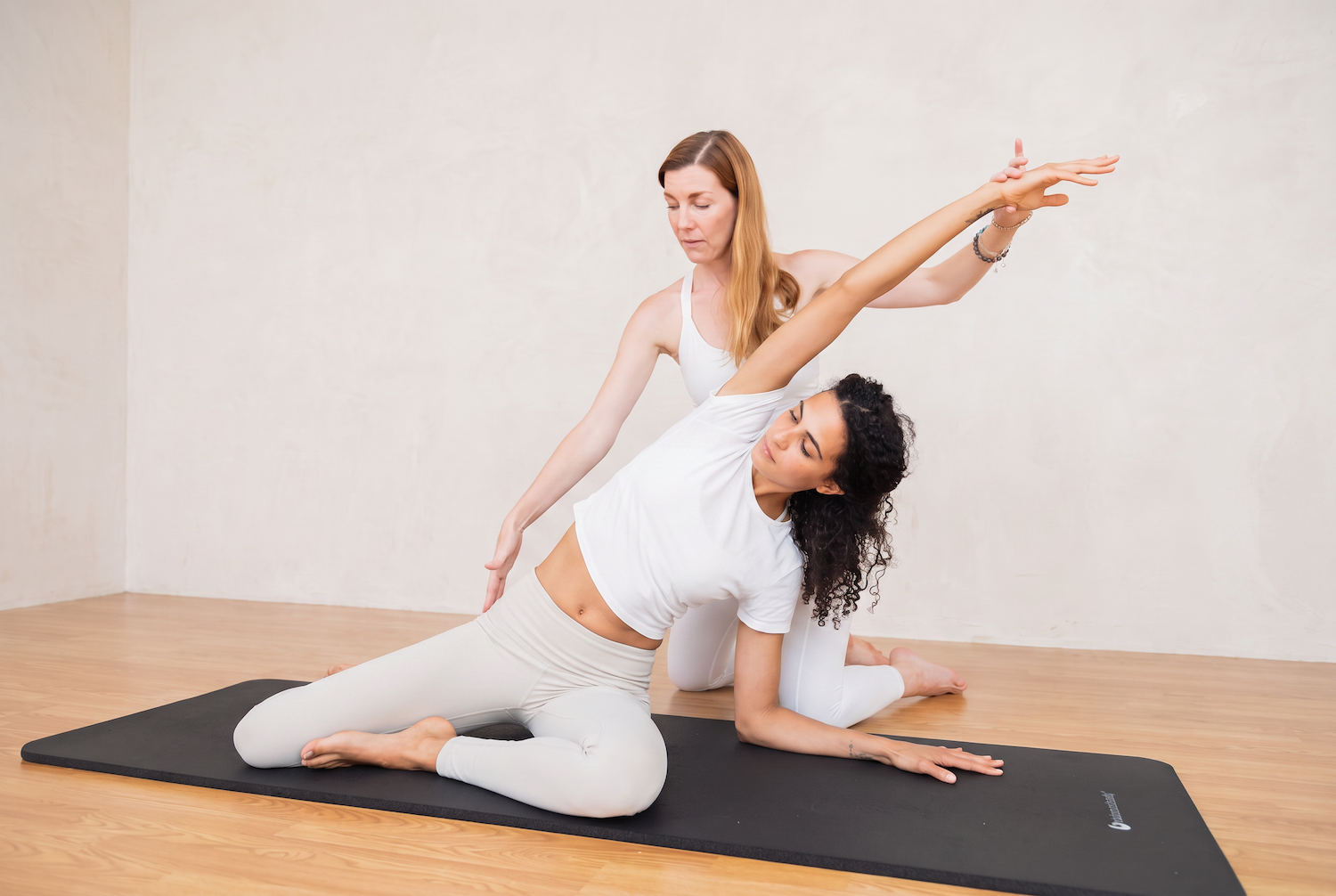
Most professional manuals include photographs to help trainees understand positioning and technique.
Unfortunately, taking those photos is rarely as simple as pulling out your phone during class.
You need:
- Consistent lighting
- A clean, distraction-free background
- Appropriate clothing that allows body alignment to be seen clearly
- High-resolution images
- Consistent camera angles
- A model who demonstrates excellent technique
If you’re photographing larger equipment like Reformers, Cadillacs or Chairs, the logistics become even more complicated. If you choose to rent a photography studio, you also have to consider how you’ll transport the equipment there – or whether it’s more practical to transform your own studio into a temporary photography space.
The goal isn’t simply beautiful images. It’s creating photographs that make technique easy to understand.
What Else Will Your Manual Teach?
Exercises are only one part of a professional teacher training.
You’ll also need to decide what educational content belongs in your curriculum.
Will you include:
- Anatomy?
- Movement principles?
- Teaching methodology?
- Observation skills?
- Client communication?
- Cueing strategies?
- Programming and sequencing?
- Injury considerations?
- Assessment techniques?
And then comes another important question:
What belongs inside the manual, and what is better taught through videos, lectures, workshops or practical sessions?
Not every lesson needs to live on the page.
Some concepts are far more effective when experienced rather than read.
How Much Information Is Enough?
This is one of the hardest balances to find.
Include too little information, and your trainees are left searching elsewhere for answers.
Include too much, and your manuals become overwhelming, making it difficult for students to find the information they actually need.
Creating a manual isn’t about fitting everything you know into a book.
It’s about deciding what your graduates need to confidently begin teaching.
Designing a Manual That People Actually Use
Once the content is finished, there’s still the question of presentation.
A professionally designed manual isn’t simply about making it look attractive.
Good design improves learning.
Clear headings, consistent layouts, thoughtful spacing, readable typography, image placement, call-out boxes, and visual hierarchy all make information easier to absorb.
Many studio owners underestimate how much time or cost is involved in creating a polished, professionally formatted manual. Even with all of the content written, turning it into something that’s intuitive, consistent, and beautiful is a project in itself.
Printed or Digital?
You’ll also need to decide how your trainees will access the material.
Some studios love the experience of printed manuals that students can annotate during training weekends.
Others prefer digital manuals that can be updated over time and accessed from anywhere.
Many choose to offer both.
Each option has different costs, production considerations, and long-term maintenance.
More Than a Manual
By the time you’ve selected the exercises, written the content, photographed every movement, designed the pages, organized the curriculum, and refined everything for clarity and consistency, you’ve created much more than a manual.
You’ve built an educational system.
That’s why developing a professional Pilates teacher training takes far longer than most studio owners expect. It’s not because the teaching is difficult…..it’s because every detail matters.
When done well, your manual becomes more than a resource for your trainees. It becomes the foundation of your educational philosophy and the standard your future teachers will carry into every class they teach.
Ready to Start Building Your Own Pilates Teacher Training Program?
Thinking about creating a teacher training manual for your studio? Let’s talk through what it would actually take for your program – apply today and we can map out the process together.


